How to Raise a Golden Retriever Puppy
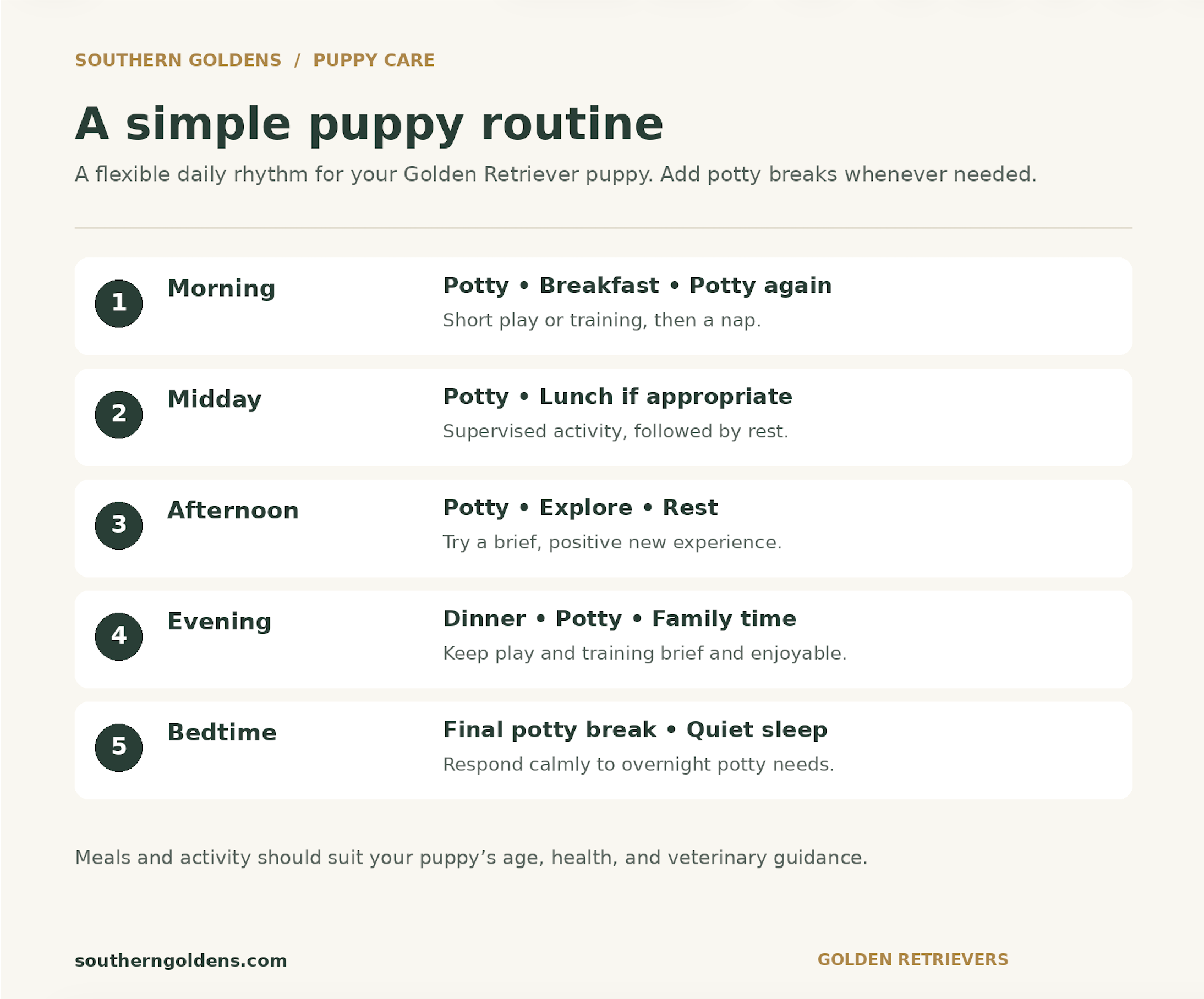
Raising a Golden Retriever puppy starts with a predictable routine: appropriate food, frequent potty breaks, plenty of sleep, gentle training, positive socialization, and regular veterinary care. Your puppy does not need to learn everything in the first week. Focus on helping them feel safe and teaching a few good habits at a time.
At Southern Goldens in College Station, Texas, we want families to feel prepared for everyday life with a Golden. This guide covers bringing your puppy home, building a daily routine, and supporting healthy development through the first year. The same care principles apply to light cream and darker golden coats.
Before Your Golden Retriever Puppy Comes Home
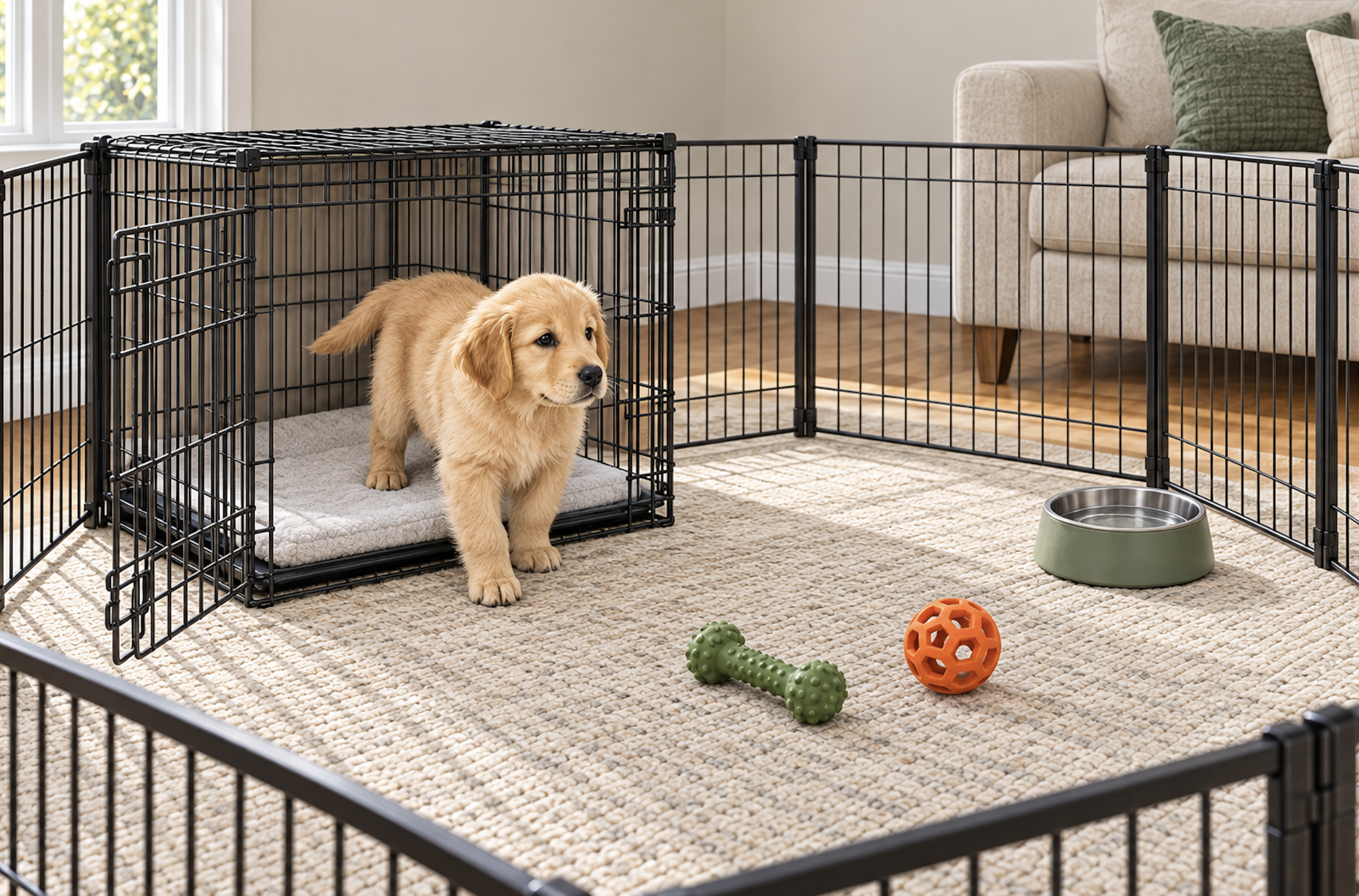
Set up one safe area with easy-to-clean flooring, a comfortable resting space, and room for supervised play. Use gates to limit access while your puppy learns the house rules. Have these basics ready:
The food your puppy is currently eating and instructions for meals.
Food and water bowls, a collar or harness, identification tag, and leash.
A crate with a divider or a secure puppy pen.
Puppy-safe chew toys and small training treats.
Waste bags, an enzymatic cleaner, a brush, and nail-care supplies.
A veterinary appointment and the number of an emergency veterinary hospital.
Put away shoes, socks, medicines, cleaners, cords, and small objects. Goldens explore with their mouths, so keep laundry and children's toys out of reach. Secure the yard and block unsupervised access to pools.
What Should You Feed a Golden Retriever Puppy
Choose a complete and balanced food appropriate for growth and your puppy's expected adult size. Ask your veterinarian to confirm that the exact formula supports large-breed puppy development. Product names and protein percentages alone do not tell the whole story.
Use the feeding guide as a starting point, measure meals, and adjust with your veterinarian as your puppy grows. Many young puppies do well with three meals a day; your veterinarian can help decide when to move to two. Keep fresh water available.
Aim for steady growth and a lean body condition rather than the fastest weight gain. Treats count toward daily intake. Avoid adding calcium, growth supplements, or multiple joint products unless your veterinarian recommends them for your puppy. If you change foods, transition gradually according to your veterinarian's advice.
Ask for help with persistent digestive problems rather than repeatedly changing diets.
How to Crate Train a Golden Retriever Puppy
Make the crate a comfortable place to rest. It should allow your puppy to stand, turn around, and lie comfortably; a divider can adjust the space as they grow. Begin with the door open. Let your puppy explore, reward voluntary entry, and build to brief door closures while you stay nearby. Increase time gradually after a potty break and when your puppy is ready to rest.
The crate is a management tool, not a substitute for companionship, exercise, or bathroom access. Arrange daytime help if your schedule exceeds your puppy's ability to stay comfortable. Remove collars or harnesses during unsupervised crating to reduce snagging risk.
Socialization Before All Puppy Vaccines Are Finished
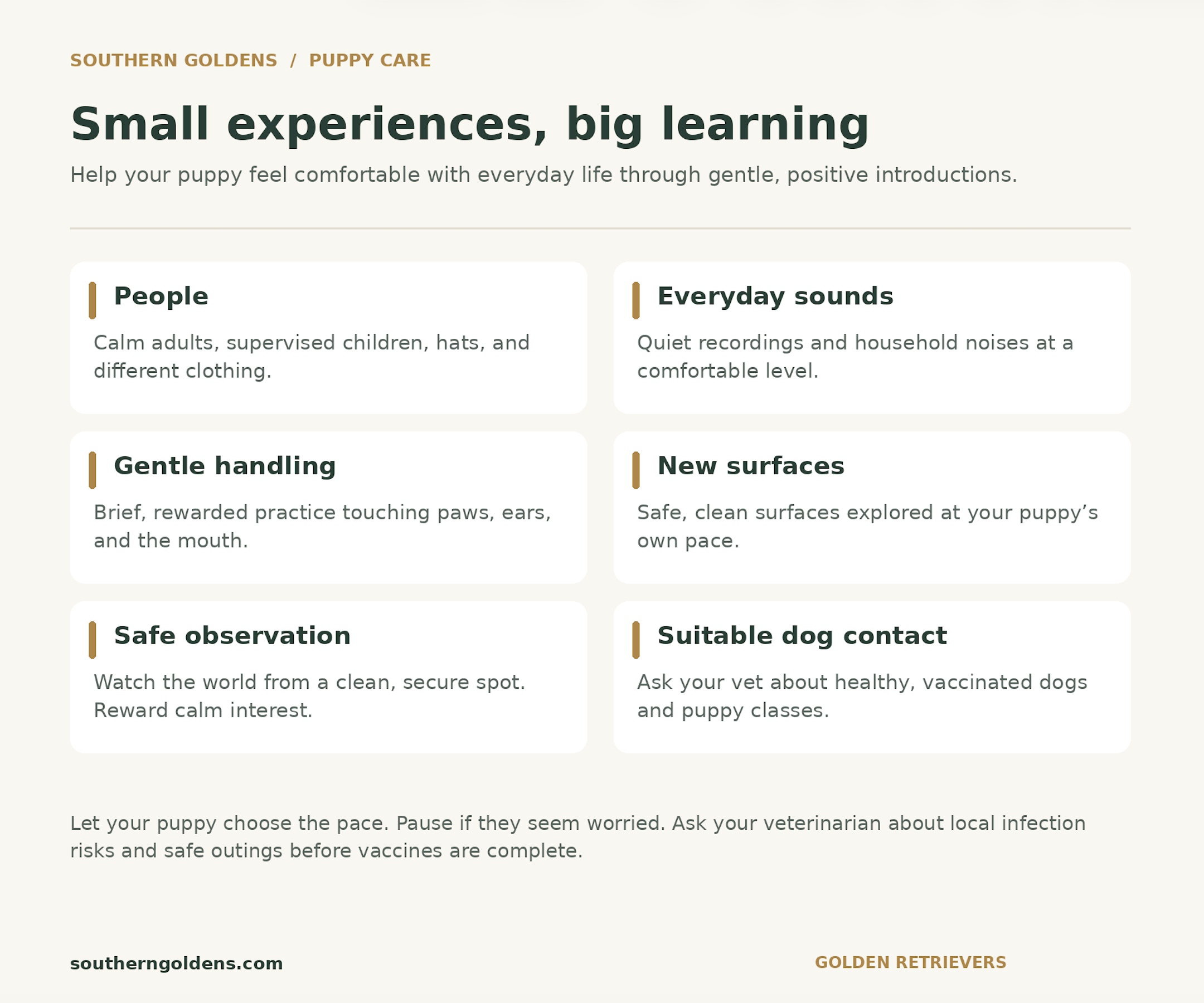
Socialization means helping your puppy feel comfortable with everyday life. It does not require greeting every person or playing with every dog. Introduce new experiences in small, positive steps: a person wearing a hat, household sounds at low volume, a short car ride, gentle paw handling, or watching activity from a clean, secure place. Let your puppy observe and move away when needed.
Early socialization matters, but so does infection prevention. Ask your veterinarian which outings and well-managed puppy classes are appropriate locally.
Avoid dog parks, unknown dogs, and heavily used dog areas until your veterinarian advises otherwise. Do not force a frightened puppy to approach something; reduce the intensity and try again gently.
Biting Chewing and Basic Training
Golden Retriever puppies often carry objects, chew, and mouth during play. Start teaching acceptable habits early. When teeth touch skin or clothing, calmly pause and offer an appropriate toy. If your puppy becomes increasingly wild or mouthy, consider whether they need a potty break, a quieter environment, or sleep. Put tempting objects away so your puppy can practice good choices.
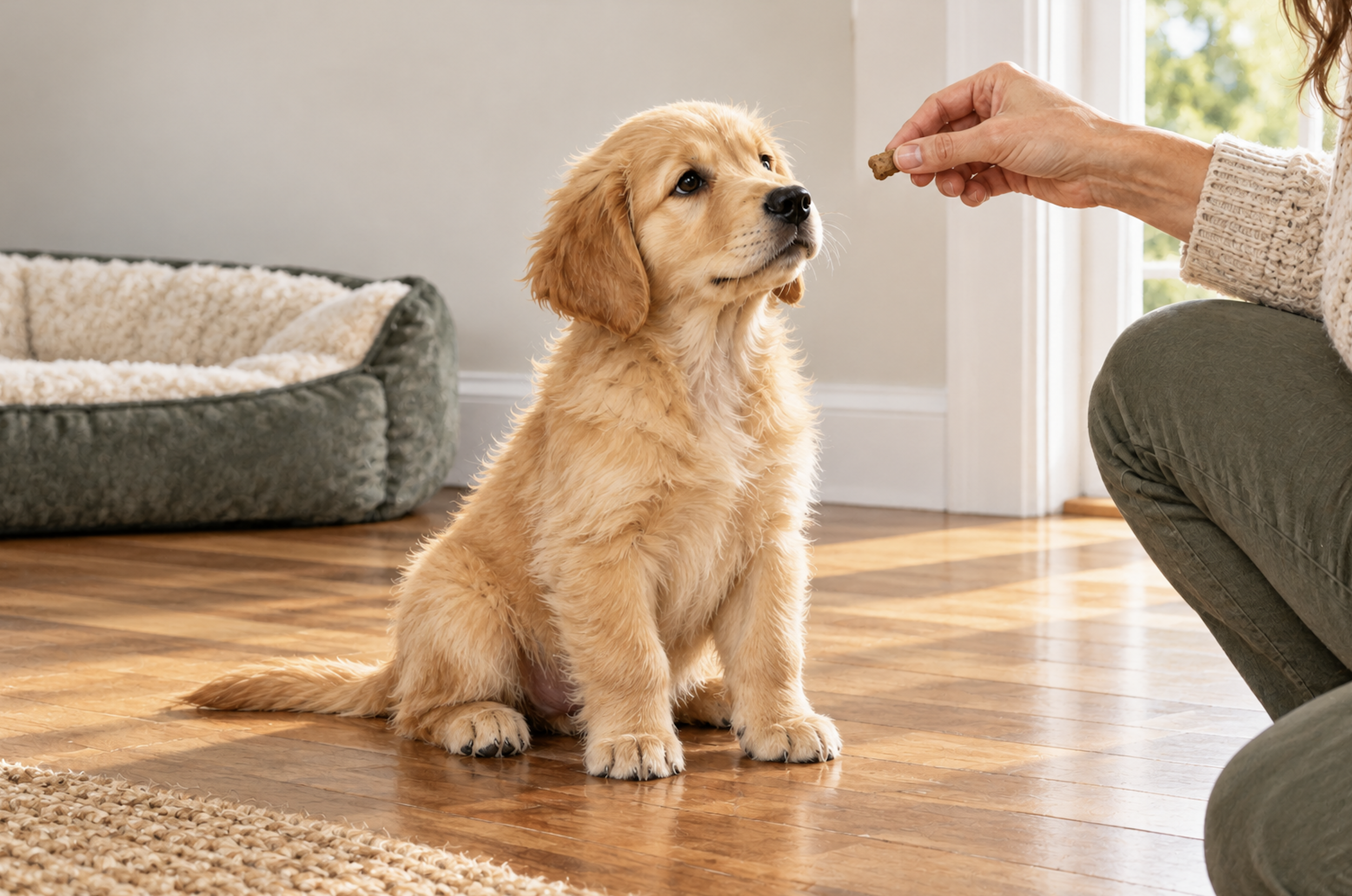
Use rewards to teach name recognition, coming when called, sitting, dropping objects, and settling. Keep practice brief and end while your puppy is engaged. Avoid rough hand play and physical punishment. Seek qualified, reward-based training help if biting causes injuries, guarding develops, or behavior concerns persist.
Always supervise children with puppies. Teach children to leave a puppy alone while sleeping or eating and to avoid chasing, grabbing, or hugging tightly.
Exercise Rest and Healthy Growth
Offer several short opportunities for play, sniffing, and learning throughout the day. Adjust activity to your puppy's development, comfort, weather, and veterinary advice rather than following a rigid exercise formula. Avoid forced-distance running and repetitive high-impact jumping while your puppy is growing. Stop when your puppy is tired or uncomfortable, and contact your veterinarian about limping or persistent soreness.
Young puppies may sleep around 18–20 hours in a day, including naps. Protect quiet rest instead of trying to keep your puppy busy all day. In Texas, plan outdoor activity around cooler conditions, provide water and shade, and avoid hot surfaces. Never leave your puppy in a parked vehicle. Heavy panting with weakness, confusion, or collapse requires immediate veterinary help.
Grooming Your Golden Retriever Puppy
Start with short, pleasant introductions to brushing and handling. Reward your puppy for calmly allowing you to touch their feet, look at their ears, and gently lift their lips. Brush regularly and pay attention to areas that can tangle as the coat grows, including behind the ears and around the legs.
Use tools appropriate for the coat and avoid aggressive brushing. Ask a groomer to demonstrate if you are unsure.
Build a routine for nail care and toothbrushing with dog toothpaste. Ask your veterinarian about ear care; redness, odor, pain, or repeated head shaking needs attention. Dry the ears gently after swimming or bathing without inserting objects into the ear canal.
Veterinary Care and Parasite Prevention
Bring your puppy's existing records to the first appointment. Your veterinarian will plan vaccine visits, fecal testing, deworming, and prevention for heartworms, fleas, and ticks according to age, weight, health, and exposure. Heartworm prevention should begin as early as the product label permits and no later than eight weeks of age, with year-round prevention under veterinary direction. Different products protect against different parasites, so confirm the full plan with your veterinarian.
Discuss growth, nutrition, dental care, and spay or neuter timing during routine visits. Parent health screening is valuable, but it does not guarantee that a puppy will never develop a health problem or replace individual veterinary care.
Call promptly about repeated vomiting, persistent diarrhea, refusal to eat, or unusual lethargy. Trouble breathing, collapse, suspected poisoning, or swallowing a dangerous object needs urgent veterinary attention.
Common Questions About Golden Retriever Puppies
Are Golden Retriever puppies easy to train?
Many enjoy learning and respond well to rewards. They still need patient practice, supervision, and consistent household rules. A friendly breed reputation does not mean a puppy arrives trained.
When should training start?
Begin gentle teaching when your puppy comes home. Start with their name, potty routines, handling, and rewarding calm behavior.
How long does potty training take?
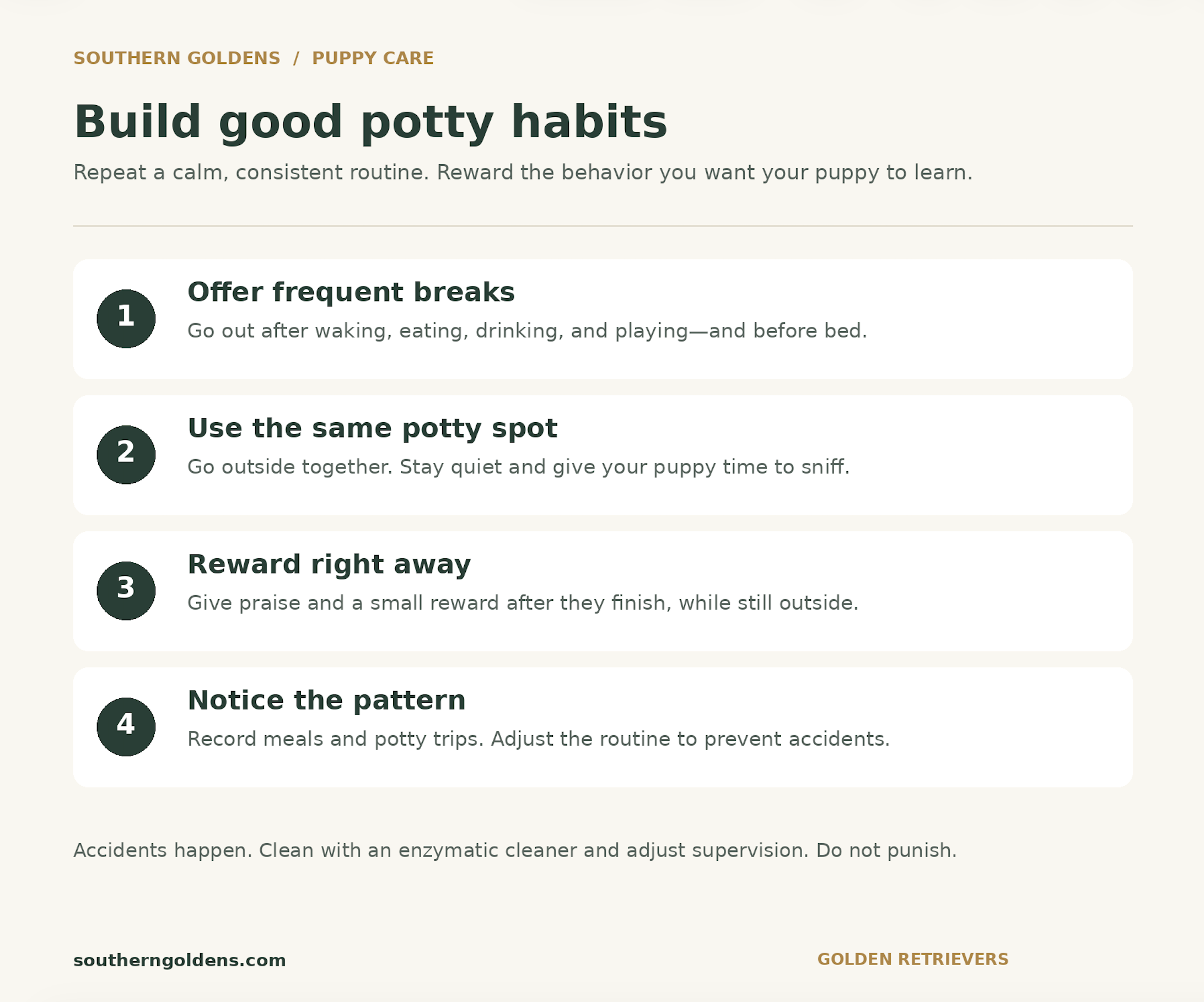
It usually takes consistent practice over weeks to months. Age, health, supervision, and routine affect progress. Sudden setbacks or urinary symptoms deserve a veterinary check.
Do English Cream Golden Retriever puppies need different care?
No. Coat color does not create a separate breed or a separate care plan. Match food, activity, training, and veterinary care to the individual puppy.
Can my puppy meet dogs before finishing vaccinations?
Ask your veterinarian about controlled contact with healthy, appropriately vaccinated dogs and suitable puppy classes. Balance early learning with local disease risk.
Planning for Life With a Golden
Learn more about life with Golden Retrievers, explore the current litter information on our homepage, or contact Southern Goldens with questions about preparing for a puppy.